Last Sights in Tokyo


On our last day in Tokyo (July 23rd), some of us got up REALLY early (3:30 am) to visit the Tokyo Metropolitan Central Wholesale Market, Tsukigi Market and Tuna Auction. Only 120 people per day are allowed in to see the Tuna Auction, so we made sure we were early. We had to wait about 1 ½ hours for our tour, which started at 5:25 am. We were in the first tour group, which wears yellow vests. The group after us wore blue vests. We’re guessing this was a way to keep track of us: the workers could tell we were supposed to be there, and they also knew when our time was up (since each tour is 25 min. long) and when we should be leaving.

Tsukigi Market supplies fish to restaurants all over the world. At the tuna market, wholesalers bid on huge frozen tuna, which are then cut up by bandsaws and sold to restaurants. The seafood intermediate wholesalers area (where all sorts of seafood is sold) isn’t open to the public until 9 am. Since we had a meeting at 8:30, we had to go back to our hotel before it opened. But we did get to see the hustle and bustle of seafood moving around the market. We were extra careful to watch out for the trucks and forklifts – they were zipping all over the place and we had to jump to stay out of their way!

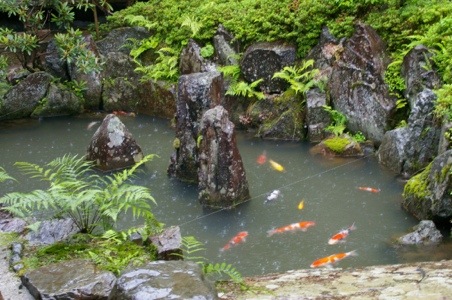
After our meeting, a few of us went shopping in Asakusa, but we had to be careful to be back by 3:00! We left the hotel as a group for a farewell dinner at a beautiful park, and we had to get there before the park closed. At 5 pm. Once we were in, we could stay until 9:00. We had dinner in a tea house on a small lake, surrounded by hungry fish and turtles. It was a beautiful way to end our trip to Japan.

The next day, July 24th, we left Tokyo via a “Limousine Bus” that took us to Narita Airport. I boarded the bus at 11:20 am on July 24th, and because of the time difference, I arrived in my neighborhood in Bothell at 11:20 on the 24th of July – how’s that for timing!

I’m glad to be back, but I do miss Japan – just a little. I can’t wait to tell you all about it in person! Thanks for reading :-).

 

Continue reading

Ghibli Museum

For one of my last Japan posts, I’m going to share a little bit about the Ghibli Museum. Hayao Miyazaki (of Ghibli studios and Totoro) is the Executive Director of the Ghibli. The museum was designed and planned carefully to be fun, whimsical and educational = all at the same time. I had to buy a voucher for a ticket to the museum before I left Seattle, since they only issue 120 foreign tickets per day.

The Ghibli Museum is located in Mitaka, a suburb of Tokyo. To get there, I had to take 2 trains and change trains at Shinjuku station. Shinjuku is a busy place. About 3 million people per day travel through Shinjuku station. I didn’t see all of them since I was there on a Sunday morning. I was also fortunate since my first train (the Hamatsucho line that loops around Tokyo) and my second train, the Chuo line (that ends in Mitaka) were right across the platform from each other when I was going to the museum. On the way back I had to follow signs and weave my way through many people – but I don’t think there were 3 million of them!

Mitaka has some big buildings close to the train station, but it is mostly houses and small stores. When I got of the train, the Ghibli Museum bus was waiting at the curb. It’s a Mitaka city bus, but it’s painted with creatures that resemble Miyazaki movie characters. It was about a 10 minute bus ride from the train station to the museum. When I reached the museum, the first ticket booth I saw had a giant Totoro in it! But I exchanged my voucher (and showed my passport) to be given a ticket at a regular desk inside the museum. The Ghibli ticket is very unique: it’s 3 frames from one of Mr. Miyazaki’s movies.

The museum looks very much like the setting of a Miyazaki movie. The building is covered with vines, and there are winding staircases and paths leading all over the museum. There is even a garden on the roof! Many of the doors are just the right size for small children, but not adults – we had to walk around. There is also a giant stuffed cat bus to play on, but only if you are under 10 years old. Photos are not allowed inside the museum, so I bought postcards with pictures of the inside of the museum.

Because it was Sunday, “family day” the Ghibli was very busy and full of families (grandparents, parents and oodles of kids). Kids were running everywhere! I especially enjoyed the display of zoetropes: figures or drawings that spin and are lit just right so they look like they are moving. There was also a reproduction of Miyazaki’s studio (complete with copies of his scrapbooks!) and a model of Studio Ghibli, where staff draw and color the movies. Everywhere I turned there was something new to see. The museum also includes a theater, which shows movies (about 2o min. long) that are ONLY shown at the Ghibli. I watched one about a boy who plants a seed that grows into a miniature planet. Once I entered the Ghibli, there was very little English to guide me. I couldn’t read most of the signs and I couldn’t understand the movie, but I really enjoyed it!
The theme of the Ghibli is “Let’s Lose Our Way, Together.” I was joyfully lost for about 4 hours! I boarded the bus and had a 20-minute tour of the city before I was back at the train station and ready to head to Tokyo.

Continue reading

Tokyo

I’ve been back in Bothell for 4 days now, but I realize I never really finished up the Japan part of my blog, so I’m rounding it out with 2-3 more entries.

TOKYO:

Approximately the same number of people live in the greater Tokyo area as live in the entire country of Canada. One of the other teachers on the trip thought it might be a good idea for the residents of Tokyo to exchange homes with Canadians for a year, but I think it might be a little difficult for the people who exchange with those who live in Yukon territory.

Tokyo was the first place in Japan we heard people use their car horns, and it was the only place that we were squished onto the subway so tightly that we could hardly move (we could have been pushed in tighter, but it wasn’t rush hour). We felt very safe in Tokyo, even though it is a big city. Police stations in Japan are called “Koban” (I included a picture). There were small Kobans everywhere we went.

We had one whole day to explore Tokyo on our own, and we also had “official business” one day, visiting the Fulbright Japan office and meeting the head of Fulbright Japan, Dr. David Satterwhite. We were invited to ask him any question we wanted to ask about schools or Japan and he did his best to answer them.

When we traveled in Tokyo, we used trains, subways and taxis. There are so many train and subway lines in Tokyo that they are color-coded. Most of them have signs in English, so if you find the right color, going the right direction, you will get where you want to go. Very few people who live in Tokyo have been to every place in Tokyo – it’s complicated and expensive to travel around the city.

On our second day in Tokyo, we had conversations with Pacemates, a group of women who meet monthly to practice their English. The Pacemates took us to lunch and then to tour an area of Tokyo. My group toured the Ginza district. This is a very expensive retail area: we stopped in one spot that cost $300,000 per square foot. In one place, people were lined up for more than a block to buy a lottery ticket at the “Luckiest Lottery store in Tokyo”. They even have commemorative fans from the store for people to use while they wait in line.

The best way to see Tokyo is to go up high. We viewed Tokyo from the 42nd floor of the World Trade Center. From there we could see the Tokyo tower, the harbor, and far in the distance, the Tokyo Sky Tree.

Tokyo was a very exciting place to visit, and I wish we could have spent a few more days there. I also think it was a great place to end our trip to Japan, since Tokyo is very different from any other place we visited. Instead of thinking that all of Japan is just like Tokyo, we could compare it to the many other places we had been.

Continue reading

Jomon Culture

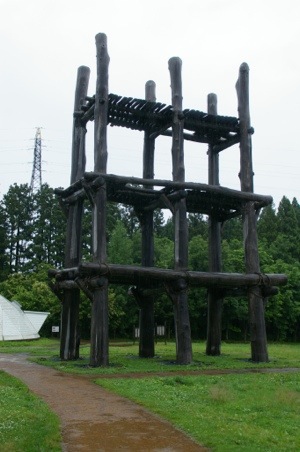
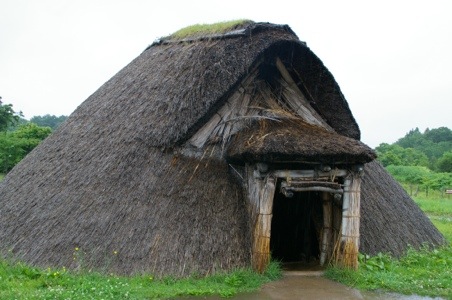
We visited the Sannai-Maruyama archeological site in a pouring rainstorm.
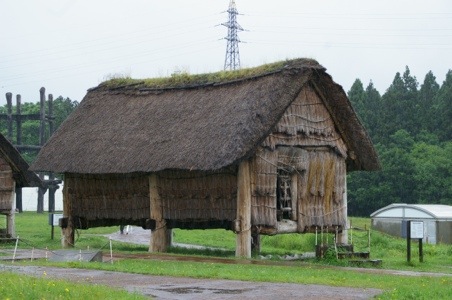
The Jomon culture was found in Japan 13,000 years ago. There is one developed archaeological site about an hour from Hirosaki. Many artifacts have been excavated and placed in a museum, and volunteers have worked to reconstruct the way the village may have looked when the Jomon people lived there. There is one huge structure that no one can figure out what it was used for. Take a look at it and see if you have a guess! Even though it was pouring, I went out and took pictures, It took my camera case all night to dry out.

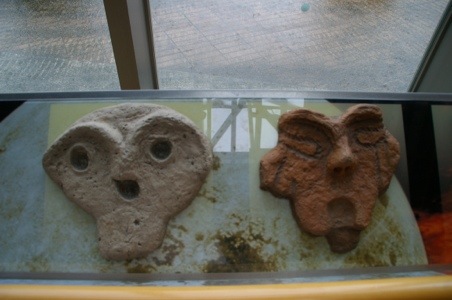
The Jomon pottery may be the oldest pottery in the world. It is decorated with rope designs. There were also several clay figures found at the site, and parts of wood huts with thatched roofs.

Many of the traditions that are found in Japan today can be traced back to the Jomon culture. There

20120720-212029.jpg

20120720-212046.jpg

20120720-212112.jpg

20120720-212133.jpg

20120720-212201.jpg

20120720-212232.jpg

Bits of Hirosaki

Hirosaki is a town that values its’ history. Our host, Tony, enjoyed teaching us about Tsugaru Shamisen, Tsugaro lacquerware and Tsugaro Indigo dye.

On our first night in town, we had dinner at a restaurant that featured Shamisen players. The Shamisen looks a little like a banjo with only three strings. It’s played with a large tool that looks like a spatula (can’t remember what it’s called) and picked at the same time, so the music sounds like a banjo and drums at the same time. It’s very fun to listen to Shamisen players. The original Shamisen players were blind beggars who played quiet songs to earn a living. Then farmers started playing during the long winter months (it starts snowing here in October and doesn’t melt until March). There were three Shamisen players at the restaurant. It was a pretty loud, folksy concert and we even were invited to sing and clap along. The next day we saw another 3 shamisen players at the National Shamisen Museum. They played very quietly (the photo is from that performance) The following day we saw two more Shamisen players. I bought some CD’s that I’ll play at school this fall.

We also saw the process of making lacquerware. Tsugaru Lacquerware is made by applying 48 layers of lacquer to wood boxes and bowls. In between the application of each layer, the lacquer is rubbed off “just enough” to make beautiful designs. I don’t have any pictures of the lacquerware (and it’s very expensive so I didn’t buy any!) but it was fascinating to watch the craftsmen make it.

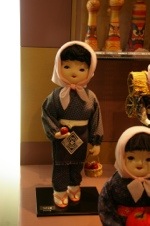
The visitor’s center had a display of local crafts. I especially liked the baskets made from beech branches and the soft fabric dolls.

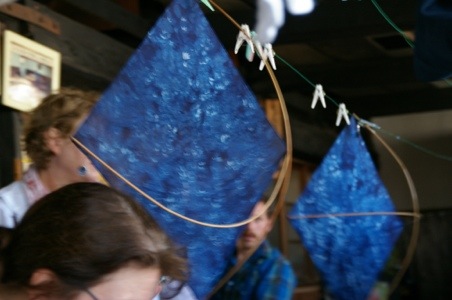
We also were able to make our own indigo dyed handkerchiefs. Indigo plant leaves are dried and then fermented to produce bacteria that make a beautiful blue dye. We made designs by folding and pinching the fabric similar to tie dye, then put the handkerchiefs in a frame and dipped them in dye vats that were 100s of years old. After we rinsed the handkerchiefs and hung them up to dry, we drank tea made from the flowers of the indigo plant. The building where we did the dyeing is over 200 years old.

20120720-210345.jpg

20120720-210408.jpg

20120720-210439.jpg

20120720-210457.jpg

20120720-210530.jpg

20120720-210543.jpg

20120720-210604.jpg

Continue reading

Hirosaki Neputa Matsura

We spent days in Hirosaki, on the Northern end of Japan. Hirosaki is not on the coast, and it was not severely affected the earthquake and Tsunami in March, 2011. It is an area that focuses on Tsugaru culture. The Tsugaru dialect that people in this area speak is so different from “regular” Japanese that they must learn Japanese in the same way they would learn English.

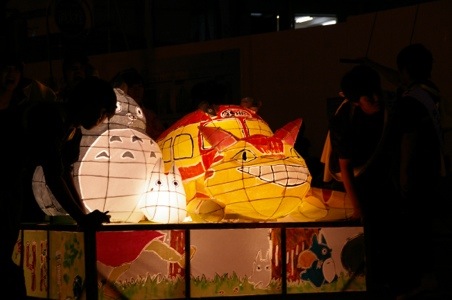
We visited an elementary school and a high school in Hirosaki. Both schools were preparing for the Neputa festival. This festival is only celebrated in the far North of Japan and it was originally an agricultural festival. Neighborhood groups get together and make huge Neputa floats out of washi paper (stong rice paper with long fibers) on a bamboo frame. The floats are lighted and most of them fold out and move as they travel through the streets. Neputa Matsura is celebrated the first week of August (with parades each night), but Hirosaki High School has their own Neputa parade, and it happened to be on the Wednesday evening that we were in town.

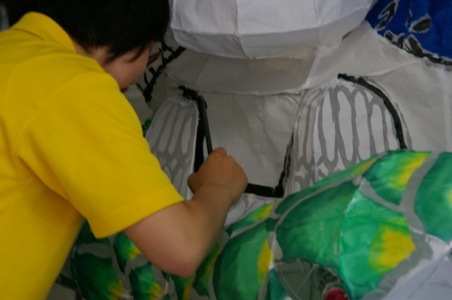
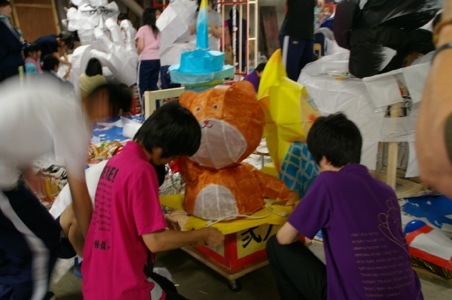
On Tuesday, we watched the students building their floats. They used photos or line drawings as their examples, and they were building big 3-dimensional floats in an underground parking garage. They built frames from wood and wire, added wiring and light bulbs, and then covered the frames with white washi paper. Some paper panels were painted before they were added to the float. The painting process was very interesting to watch. First, students sketched their designs with pencils, then they painted them with black ink. After the black was done, they painted wax over the black part of the design (like batik) and then filled in the spaces between the waxed parts with liquid watercolor paint. Large teams of students worked on each float. The floats were incredibly detailed and we were amazed at the amount of work that went into each float.

On Wednesday night, we went downtown to see the High School Parade. Teams of students pulled each float, which was on a 2-wheeled cart with a generator underneath. Each float was followed by students playing a large drum, cymbals and flutes. The students were so excited and happy that we almost lost our voices cheering for each float as it rolled past.

The pictures show students building the floats, and some photos of the parade. Of course, photos can’t compare to sounds and sights of the parade. It was amazing!

20120720-185744.jpg

20120720-185815.jpg

20120720-185837.jpg

20120720-185854.jpg

20120720-185914.jpg

20120720-185929.jpg

20120720-190005.jpg

20120720-190056.jpg

Continue reading

Tsunami, 18 months later

Today we joined a representative of Peace Winds Japan to tour Kesennuma and Minamisanriku. These two towns were hit by waves that were 4 stories high when the earthquake and tsunami hit Northern Japan on 3.11.11.

Both communities look very different than they did 18 months ago. The waves destroyed everything that was near the shore, and in some cases moved 6 miles inland. The waves were so big and moved so fast that areas that had never been hit by tsunamis were wiped out.

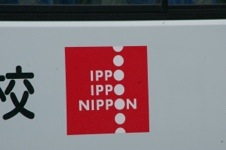
We visited Koyo Maritime High School (a high school with an emphasis on fisheries) which is now located in temporary buildings since it’s 4 story school building on the coast was destroyed. The students had left for the day when the tsunami struck, and the teachers in the building were saved because they climbed to the roof. We met with the principal of the school. He is optomistic about the future of the community and proud of the work his students are doing, and even though they are lacking many of the supplies they need to learn about fisheries, they are scoring well on their exit exams and finding jobs in their chosen field. On the school’s bus was a “Ippo, Ippo, Nippon” sticker. The Ippo Ippo Nippon project was launched by the Japan Association of Corporate Executives to help rebuild in areas destroyed by the quake, and schools are the recipient of some of their funds. Peace Winds Japan has helped provide a boat and other equipment for the school.

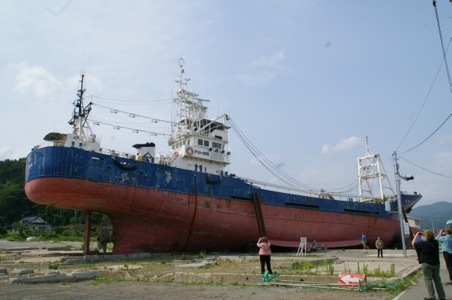
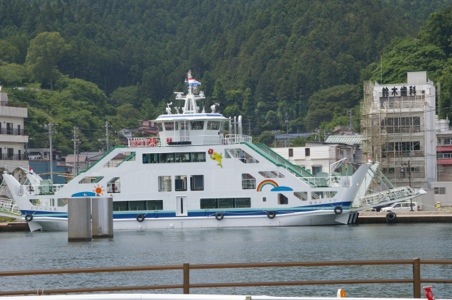
We stoped in Kesennuma for lunch in a temporary shopping area. Later we also went shopping in a similar area in Minamisanriku. These temporary shopping malls are set up in portable “boxes” so local merchants can continue to earn a living. It was a little strange to go shopping in an area right next to empty foundations that used to be houses and businesses. We saw several places where trees had turned brown: a result of the salt water that hit them when the waves rolled in. In Kesennuma we saw a huge ship that was moved 1/4 mile in from the harbor, and saw a car crushed underneath it. There are no cranes big enough to move it, so it will have to be taken apart and moved piece by piece.

Most of the debris from the tsunami has been removed from the middle of the towns. We drove past places where there was debris piled 3-4 stories high. Since no one is allowed to rebuild houses, schools, or other places that might hold many people in a Tsunami zone, there are huge areas of nothing but foundation and bits and pieces of debris. The Kesennuma shopping center featured “Sea Squirt Boy” who carries a fish as a sword. He is a symbol of the power of the city to rebuild itself after the tsunami.

Everywhere we saw signs that people are going on with their lives. Students were walking home from school and people were busy working to tear down and rebuild fallen buildings. We were priviledged to tour Minamisanriku with a survivor who had been in her home almost on the beach when the earthquake hit. She and her family drove uphill and kept on driving as announcements from the emergency center told them that the waves were higher than predicted. She and her grandson lived for 2 weeks in a school gym with with other survivors (with very little food and one bottle of water a day) before help was able to reach them. Today one of her jobs is to take tourists around her community and tell them what happened, so they can see firsthand what the tsuami did and learn how the community members are coming together to rebuild their lives.

One of the saddest places we visited was the former Emergency Preparadness Center in Minamisanriku. This 4 story building was the place where announcements about the waves were made. The staff stayed to make announcements and make sure the community members knew how far they needed to go to escape the waves, but the waves were so big that they covered the emergency building. The staff of the emergency prep building died helping others get to safety. Today that building is only a metal skeleton, with tributes at the bottom to those who died, including many paper cranes.

Overall, the message from the Coast of Northern Japan is one of thanks and one of hope. People are thankful that others from all over the world helped them in their time of need, and even though there are still many things they need, they are ready to rebuild and go on with their lives. Many neighborhoods have moved into temporary housing together, so families that lived together before can still be together. They are looking forward to new homes and new lives.

20120713-221624.jpg

20120713-221651.jpg

20120713-221707.jpg

20120713-221725.jpg

20120713-221735.jpg

20120713-221749.jpg

20120713-221804.jpg

20120713-221821.jpg

20120713-221848.jpg

20120713-221907.jpg

20120713-221921.jpg

20120713-221941.jpg

20120713-222000.jpg

20120713-222030.jpg

20120713-222048.jpg

20120713-222119.jpg

20120713-222132.jpg

20120713-222144.jpg

Continue reading

Traveling to the North

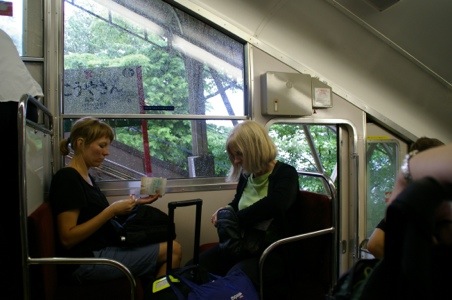
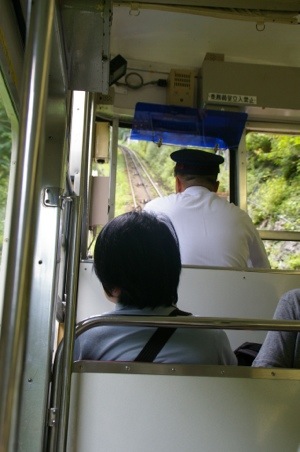
Today we are in Ichinoseki. On the map of Japan, it is pretty far North. We will be visiting areas that were destroyed by the Tsunami in March, 2011. To get here from Koyasan was quite a challenge. We rode a bus to a cable car down the mountain, then caught a train. We transferred to a second train, and then caught the subway in Osaka. From the subway, we switched to the Shikonsen (bullet train). We rode on three different Shinkonsens and ended up in Ichinosaki. We left Koyasan at 8:20 in the morning and arrived in Ichinoseki at 5:20 pm.

20120713-082630.jpg

20120713-082655.jpg

20120713-082724.jpg

20120713-082808.jpg

20120713-082823.jpg

20120713-082839.jpg

20120713-082852.jpg

20120713-082907.jpg

20120713-082928.jpg

Koyasan

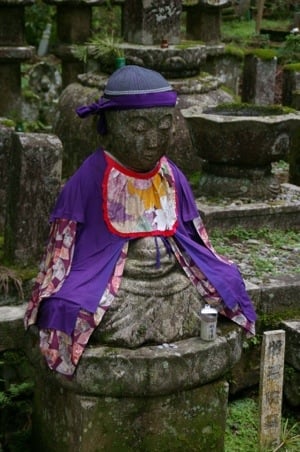
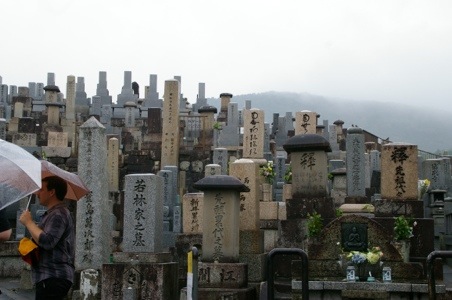
We spent 2 days in Koyasan, a town high in the mountains that will soon celebrate it’s 1200th birthday! Koyasan was founded by Kobo Daishi (also known as Kukai). Our tour guide was Rev. Taijo Imanaka, who has also lived in Seattle. We were able to see Japan’s largest cemetary (both dignitaries and common people’s graves are here) called Ukunoin and toured the headquarters of Shingon Buddhism. There are 117 temples in Koyasan, and about 50 of them host guests. We stayed at Rengejo-in, where we slept iin traditional style Japanese rooms and ate wonderful vegetarian meals. We were also invited to participate in evening meditation and morning chants with the monks.

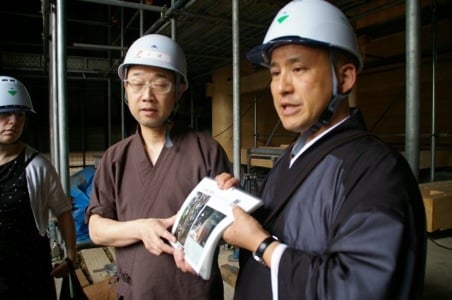
We toured the reconstruction site of the Middle Gate on the grounds of the headquarters. Modern carpenters are using tools and techniques that are the same as those used in the 1300s. The gate has 18 posts made from 300 year old Cypress trees, and each of them is set in a rock. It took 50 days to get each post set correctly. There are no nails used in construction. The gate, when finished, should last 500 years.

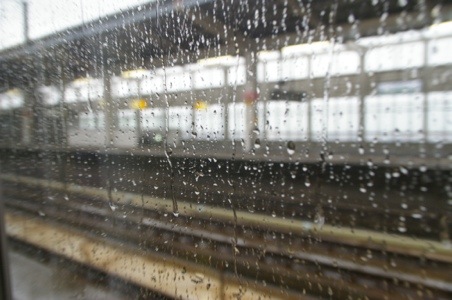
We had great weather to tour Koyasan, but it did rain the day we left. I took a lot of pictures of the downspouts, since they looked so artistic with rain flowing down.

20120713-065515.jpg

20120713-065543.jpg

20120713-065610.jpg

20120713-065627.jpg

20120713-065655.jpg

20120713-065713.jpg

20120713-065730.jpg

20120713-065750.jpg

20120713-065811.jpg

20120713-065841.jpg

20120713-065938.jpg

Kyoto and Nara

I have now been in Japan for 2 weeks. In two more weeks I’ll be back in Washington! We have been staying in Kyoto since July 4th and we will be leaving tomorrow.

Kyoto was the capitol of Japan before the capitol was moved to Tokyo. We visited a palace that was the home of the Shogun (leader of Japan) and the grounds of the palace of the Emporer. We were given two guided tours: the first one was by a gentleman named Aki. He took us by bus around Kyoto and told us how ancient Kyoto and modern Kyoto live side by side. We saw temples and palaces. The next day we took a walking tour with Professor George. He has been a University professor in Kyoto for more than 40 years. He took us on a walking tour that followed the footsteps of Dutch traders as they traveled through Kyoto in the 1700s. It rained really hard during this tour and we got pretty wet, but we did see some amazing sculptures and shrines. One temple had 33,333 buddhas in it!

Yesterday we visited Nara. Nara was the first permanent capitol of Japan (before Nara was established, the capital of Japan was wherever the Shogun lived). There are sacred deer in Nara that wander all over. People feed them cookies. I’m having trouble downloading deer pictures so I’ll get them posted as soon as I can. Nara is home to a giant Buddha. The picture of the little girl crawling through a hole in a post is an example of the size of the Buddha’s nostril.

This will be my last post for a few days. We are traveling to Koya-san, a temple on a mountain top where we will stay for 2 nights. Then we will travel to areas that were damaged by the tsunami in 2011. It will be about 5 days before I have internet access again.

20120709-222838.jpg

20120709-222849.jpg

20120709-222908.jpg

20120709-222930.jpg

20120709-222944.jpg

20120709-223014.jpg

20120709-223034.jpg

20120709-223049.jpg

20120709-223115.jpg

20120709-223133.jpg

20120709-223201.jpg

20120709-223232.jpg

20120709-223251.jpg

20120709-223330.jpg

20120709-223411.jpg

20120709-223431.jpg

20120709-223441.jpg

20120709-223505.jpg

20120709-223523.jpg

20120709-223542.jpg

20120709-223603.jpg

Continue reading